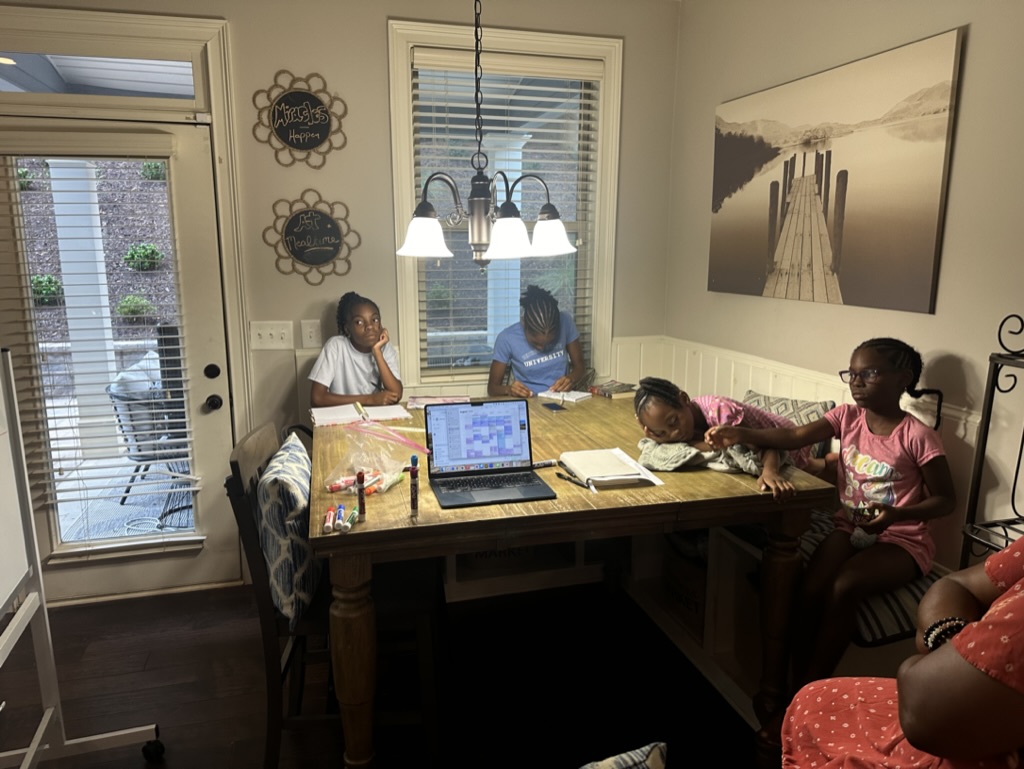
I couldn’t figure out for the life of me why this wasn’t working out the way I’d envisioned. For the second week in a row, our Sunday evening planning meeting was ending in disaster. In hindsight, I should have seen it coming. For starters, my wife warned me that this would happen. The conditions aren’t favorable for a planning meeting, she said. It’s late, the kids will be tired, I’m tired. Who will be in the optimal frame of mind to be able to reflect back on the week, or think ahead? Nineteen years in and I’m still learning… Still, to her credit she agreed to go along, even if it was only to get along. So, this is how we found ourselves around our kitchen counter with planners, schedules, and tears on a Sunday evening at 9pm. All the while I’m wondering, how do I parent the children I have, not the child I was?
To figure out how we got there, you have to journey back to my childhood with me for a moment. I spent the first half of my life growing up in a military household with 3 siblings where everything ran like clockwork. There was order, stability, and most of all discipline. The second half of my childhood felt more like disorder, chaos, and one emergency after the next. One of the lessons I took away from this traumatic shift in circumstances was to try and control as much as I could. Preparation became my secret weapon for approaching everything in life. I shied away from risk and unpredictability. Planning became like a crutch, and in many ways it worked. I was able to build a life again of order and stability to address a deeply held childhood wound.
But, as my therapist says and my own life experiences have taught me, there’s only so much we can control right? Besides, if I’m being honest, many of my greatest experiences actually came as a result of risk taking or embracing the unpredictable moments outside of my control. I’ve been doing the work necessary to better understand my own story, and that’s been tremendously informative for me as a husband and father. One of the things I’m realizing is that my four daughters are different people than I am, with their own stories (novel concept right?). What if they don’t have the same issues that I grew up with? It makes sense, we’ve created an entirely different set of conditions for their life.
I’ve been so focused on helping my oldest two learn and practice executive functioning skills, that I’ve not paused long enough to pay attention to what they already know how to do. Yesterday I received an email from my middle schooler organizing a meeting of her “dream team” of adults who she’s inviting to counsel her as she pursues her self-directed learning goals. The same day, my high schooler who absolutely hates to write anything down, sent me a text confirming the availability of a few dates for her upcoming apprenticeship. They’re figuring things out in their own way, sort of just like we’ve modeled for them (imagine that!). While it’s difficult for me to accept (because sometimes it’s not the way I would do it), I’m proud of them for figuring things out on their own.
For next week’s planning meeting (because there will be a planning meeting next week!), I’ll try a different approach. First, it’ll be earlier in the day. Samantha’s right, let’s make the conditions as favorable as possible. Second, I’m going to manage my expectations about their level of enthusiasm. Sure I think this is a valuable skill set for them to have, but they definitely don’t yet and that’s ok. I keep telling myself, I’d rather them fail now while the stakes are low. Examined experience is still the best teacher. I’m going to start viewing our time together as a time to hold space for intention setting, reflection, and questions. We’ll see what comes up for them. Who knows, it might be just exactly what they need.
SDW3
 everyday fatherhood