Until the lions have their own historians, the history of the hunt will always glorify the hunter. – African Proverb
Over dinner the other day, the girls and I started talking about what they’re learning currently in their history classes. My oldest two are teenagers, one currently taking US History and the other is currently taking the new AP African American Studies course. As my 13 year described how her US history course began with the settlers “discovering” America, she mentioned that the curriculum did at least acknowledge that other people already lived there. But, she also noticed a curious gap between the end of the Civil War and the start of the Civil Rights movement. My oldest daughter, recalled a similar experience, saying that her US history course offered a throwaway sentence or two about the reconstruction era and that was it. Neither of them could really explain what happened in between.
I told them that, growing up in the South, I had many of the same questions, only my textbooks were even less honest. Reconstruction wasn’t skipped; it was erased. The Civil War, on the other hand, went by other names: The War of Northern Aggression. The War Between the States. (No exaggeration.) I was left wondering, so we fought a whole war, which I thought was about slavery but apparently that’s not a widely held belief, and why 100 years later then did we need a civil rights movement? Something clearly wasn’t adding up.
What I didn’t get in my formal K–12 education, I eventually found for myself through my own love of history. In college, an introductory African American Studies course changed everything. For the first time, I was reading Black authors and learning about Black contributions to history and society—stories I was embarrassed to admit I had never been taught. That class marked the beginning of a personal awakening, as I tried to locate myself in a world where, until then, I had often felt unseen or erased. It’s remarkable what happens to a person when the full story is comes into view.
Becoming a father only sharpened that awareness. I knew I wanted to give my children something I hadn’t received early on: the ability to see the world beyond a whitewashed version of American history. That’s why we do things like read age appropriate books about historical experiences, and visit museums, and watch videos and have discussions together. I want them to see themselves in history yes, but I also want them to understand from whose perspective the story is being told.
There’s an African Proverb that says, until the lions have their own historians, the history of the hunt will always glorify the hunter. Most of what we call “history” is told through the lens of those in power. To the victors go the spoils and the narrative.
The last time my family and I were in DC, I made sure we spent time at the The National Museum of African American History and Culture, colloquially known as the Blacksonian. It wasn’t our first time, but given where we are as a nation, it felt necessary. This weekend, with MLK approaching one of my daughters suggested that we go back to the National Center for Civil and Human Rights, located here in Atlanta. Even they get it.
There is a concerted effort underway to erase parts of our history, and the people who will feel the consequences most deeply are the ones coming next. Erasure rarely happens all at once, and it never stops with just one group. That’s why it falls to us—parents, citizens, educators, and storytellers—to learn and pass down the whole story, not just the parts that make us comfortable.
And it starts with a simple but difficult admission: the story many of us were given is incomplete. The only way to fill in the gaps is to stop listening only to the hunter and finally ask the lion.
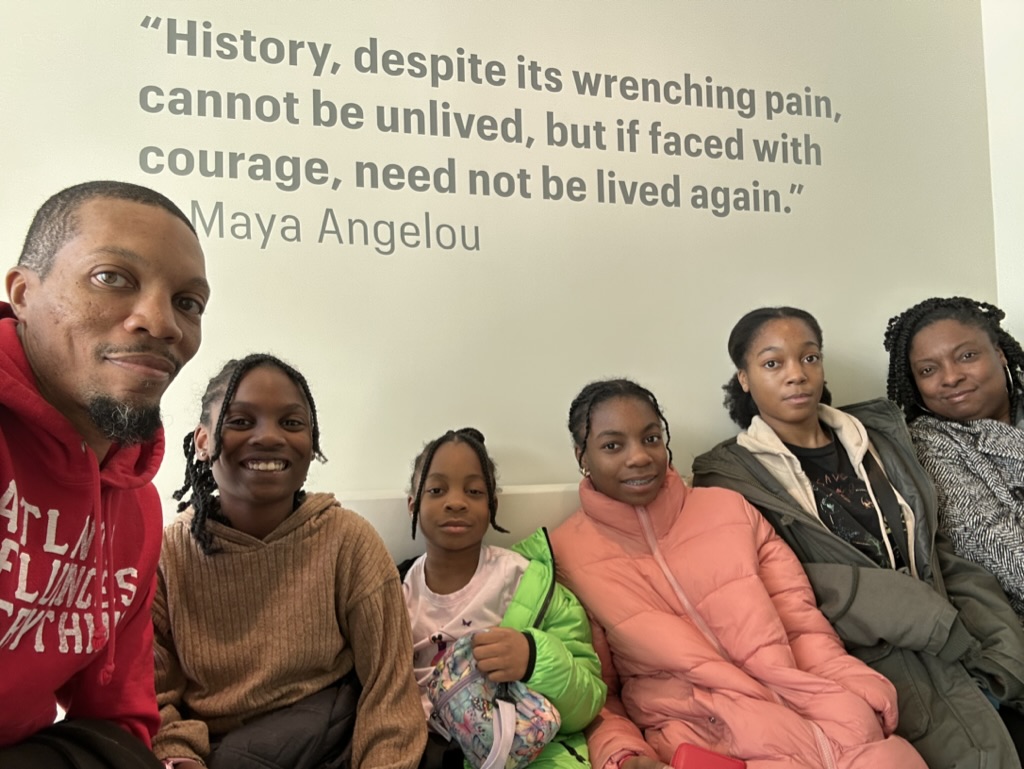
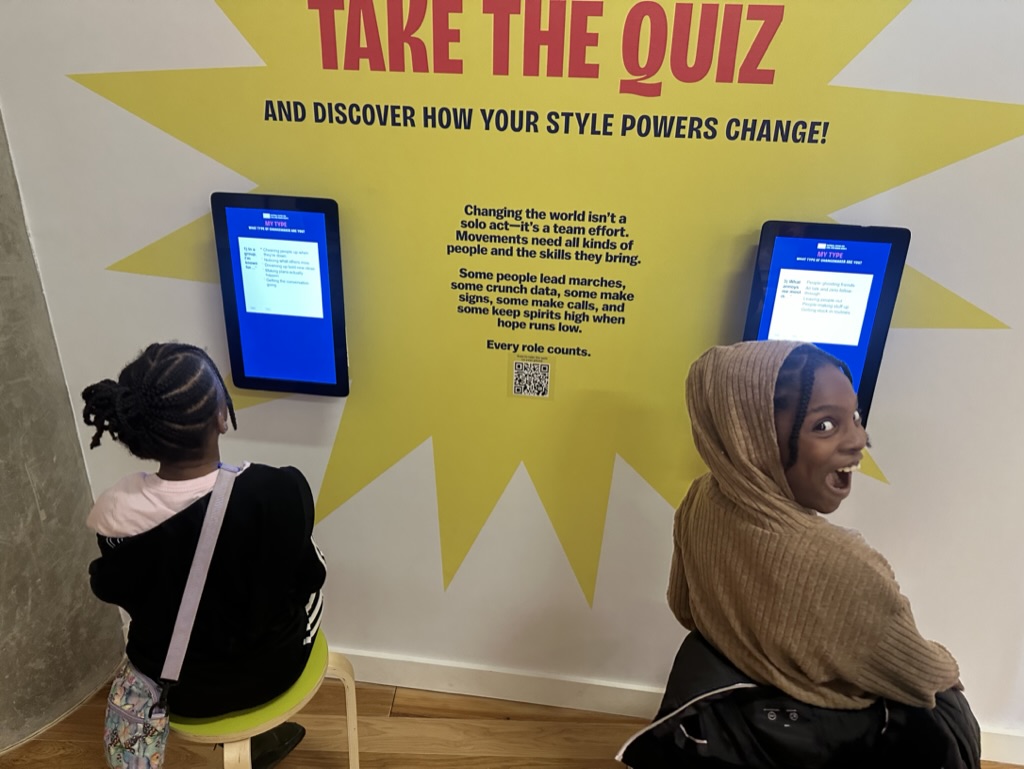
PS. We went to the museum and it was probably one of my favorite times at the museum with my family. Museums can be difficult to navigate, depending on the content and the ages of kids. One activity I really appreciated was the quiz and discussion around what type of changemaker are you? Everyone in the family took the quiz and then we compared notes about how this resonated.
Here’s the link if you want to try it with your family. It led to a great discussion for ours.
SDW3
 everyday fatherhood